Introduction – The Cost of Indifference
Every tiger alive today is the result of a decision. Some made in cabinet rooms, others ignored in silence. Across Asia, policies are drafted with noble words—biodiversity, sustainability, coexistence—yet most forests fall to the same forces: greed disguised as development and political will that bends when money speaks. For decades, tiger protection has been trapped between promise and betrayal. Funding arrives with ribbon cuttings, then disappears into bureaucracy. Reports are published, inquiries launched, but the actual enforcement never comes.
A tiger dies not because we lack knowledge or resources, but because power refuses to act against its own interests. When governments choose to protect, recovery follows. When they stall or sell access, extinction becomes a political project. From Sumatra’s burning peatlands to Russia’s frozen taiga, one truth repeats: the fate of tigers mirrors the integrity of those who govern them.
Political will is not policy—it is conviction tested in the face of profit.
Why Political Will Matters
Conservation succeeds when it becomes politically unavoidable. The presence or absence of tigers tells citizens whether their leaders care about the future or just the next election cycle. Political will turns enforcement into priority, budgets into weapons, and corruption into treason. Without it, forest departments are left with paper laws and unpaid guards. A strong leader can end illegal logging overnight, but only if punishment outweighs the bribe. In every tiger range country, the same variables recur—funding, training, and laws—but results diverge sharply depending on political resolve.
In India, the Indian tiger Authority (NTCA) coordinates one of the largest wildlife monitoring systems on earth because Delhi made it a national mission. In contrast, Malaysia and Indonesia continue to draft plans while granting palm-oil concessions inside protected corridors. The difference is not science—it is courage. Political will is the invisible infrastructure beneath every reserve. Without it, technology fails, patrols fade, and extinction becomes a managed decline masked as progress.

Indonesia: Promises Lost in the Palm Shadows
Indonesia is home to the last Sumatran tigers—and to one of the world’s most profitable deforestation economies. The government has pledged protection countless times, most recently through the Ministry of Environment and Forestry, yet enforcement remains weak. Logging and plantation interests dominate local politics; permits are traded like currency, and poachers operate under the cover of industrial transport routes.
A single hectare of palm oil yields tax revenue within a year; a tiger yields nothing on paper. Political will collapses under arithmetic that favors immediate cash over long-term survival. Each burned peat swamp erases decades of conservation work. In Riau and Jambi, provincial leaders hold shares in the same companies they are meant to regulate.
Community patrols trained by NGOs struggle without police support, and activists exposing illegal felling have been threatened or silenced. The pattern is deliberate: delay reforms, deny evidence, deflect blame toward villagers. True leadership would mean prosecuting corporations that buy timber from protected zones and revoking licenses from repeat offenders. Until Jakarta aligns profit with preservation and protects those who speak out, Sumatra will remain an island where every tiger track ends at a boundary signed by government hands.
Malaysia: Silence and the Vanishing Malayan Tiger
Malaysia once held more than 3,000 tigers, now fewer than 150 remain. The government acknowledges the crisis but responds with slow committees and ceremonial patrol launches or ridiculous sanctuaries. The Malayan tiger’s decline is not a mystery at all. Looking closely into it you see the product of weak enforcement, fragmented planning, and muted urgency. Logging continues inside reserves under the label of “sustainable harvest,” and roads cut through critical habitats without crossings. And with a Malayan government that pledges to save the Malayan tiger whenever they feel it’s necessary. So in reality nothing really changes. The conclusion? Palm oil remains too important for the Malayan government.
TRAFFIC and regional NGOs have documented cross-border trade routes linking Malaysia to Thailand and Laos, yet prosecution remains rare. The Wildlife Crime Bureau has fewer than fifty officers to cover an entire peninsula. Political will here means confronting the timber lobby and exposing provincial corruption, but the silence is telling. Corporate donors fund election campaigns; ministers call them “partners.” Rangers risk their lives for salaries that arrive months late, while morale collapses.

The difference between a functioning system and Malaysia’s paralysis is not funding but honesty. Neighboring Thailand, with fewer resources, maintains consistent patrol coverage. Malaysia has reports. The Malayan tiger may vanish not from lack of knowledge but from a bureaucracy that has learned to survive without results and with lies towards the international community.
Until Kuala Lumpur elevates tiger survival to the same level as palm oil, trade and transport, extinction will remain an accepted cost of doing business.
India: Leadership and the Legacy of Project Tiger
India is the global test case for what happens when political will is sustained. Launched in 1973, Project Tiger turned crisis into recovery through central funding, dedicated reserves, and continuous monitoring. The leadership of Prime Minister Narendra Modi has amplified that legacy by positioning tiger protection as both patriotic duty and diplomatic symbol. India hostsabout 65% of the world’s remaining wild tigers, not by accident but by persistence.
The Global Tiger Forum (GTF) credits India’s model—where states receive incentives for rising numbers and penalties for negligence. Unfortunately, the GTF is a toothless tiger, as they are too afraid to stand up against the political unwill of most tiger range countries. The NTCA enforces audits, relocates vulnerable villages with compensation, and monitors progress publicly. Recent reforms introduced digital tracking of compensation payments and a unified camera-trap database that makes data manipulation nearly impossible.
India’s example proves that visibility sustains accountability. Internationally, Modi has leveraged tiger conservation as soft power, presenting it as proof of national discipline and ecological strength. Challenges persist—shrinking corridors, retaliatory killings, and development pressures—but the underlying system endures because leadership demands measurable results. Political will here is institutionalized. As long as that expectation remains political currency, India’s tigers will have a fighting chance.
China: Turning Policy into Protection
China once symbolized the tiger trade; now it represents cautious reform. The government’s decision to ban domestic trade in tiger bones and skins signaled rare political will to prioritize image and ecology over traditional commerce. Backed by the Chinese National Forestry and Grassland Administration, rewilding projects in the northeast now link reserves along the Amur-Heilong border with Russia.
The creation of the Northeast Tiger and Leopard National Park in 2021 merged fragmented forests under unified management—a bureaucratic miracle in Chinese terms. Political will here manifests as top-down control: strict boundaries, heavy surveillance, and state media campaigns that recast the tiger as symbol of national rejuvenation rather than medicine-cabinet ingredient.

Results are tangible—camera traps record breeding pairs for the first time in decades. Critics note that success depends on political continuity, not democratic oversight, but the effect is undeniable. When China chooses to act, it mobilizes millions. The question is whether that same determination can reach consumer behavior, shutting illegal online markets that still function in shadows. Or another question: Can China stop with its tiger farming?
Russia: When the State Decides to Guard the Forest
In Russia’s Far East, the Amur tiger has become a geopolitical statement. After near extinction in the 1940s, the population has rebounded to about 750 due to direct state intervention. The Amur Tiger Centre coordinates patrols, prosecutes poachers, and manages outreach with military precision. The Kremlin’s involvement—starting with Vladimir Putin’s personal endorsement—turned tiger protection into national prestige. Political will here is absolute: rangers have authority, courts cooperate, and sentences are severe.

The result is deterrence. Poaching syndicates that once operated openly now face real prison time. Logging companies have learned that permits do not override environmental orders. Russia’s model is authoritarian but effective—it proves that when the state’s interest aligns with the species, results follow quickly. However, dependence on centralized charisma is risky; new leaders may treat wildlife as expendable. For now, the Amur tiger stands as proof that disciplined governance can reverse collapse when politics chooses integrity over convenience.
The Price of Corruption and Convenience
Corruption remains the single greatest predator of tigers. Bribes smooth illegal timber exports, and politicians grant mining or plantation leases inside critical habitats. When the UNDP Global Tiger Initiative reviewed national budgets, it found conservation funds diverted to unrelated projects and personal networks. Political will evaporates when accountability threatens income. In Indonesia and Malaysia, campaign donations come from the same industries responsible for deforestation.
Officials promise reform after every crisis, then quietly extend permits once attention fades. This is not ignorance—it is collusion. Every signed approval for a road through tiger habitat is a choice to kill silently. The same occurs in India, where local politicians approve sand mining under the excuse of “rural employment.” Or state ministers conveniently lose conservation files to stall the decision to create a new tiger reserve.
Until corruption is prosecuted as environmental homicide, protection will remain theatre. Political will means refusing compromise even when it costs votes. The forests do not need sympathy; they need governments willing to lose elections to save them.
Budgets, Bureaucracy, and the Illusion of Progress
Governments love announcing budgets. They photograph oversized checks, release colorful reports, and claim success in percentages. Yet many tiger programs exist on paper only. Political will is measured not by how much money is promised but by how quickly it reaches the ground. In several Southeast Asian nations, funds allocated for patrol vehicles or ranger housing remain unspent at fiscal year-end. Bureaucrats delay procurement, ministries feud over jurisdiction, and guards continue on foot.
India’s NTCA public dashboards show which reserves lag; Indonesia and Malaysia publish nothing comparable, concealing inefficiency behind silence. Donor fatigue grows when governments under-deliver. Real progress requires punching through inertia: publish expenditures, track results, reward field performance. Political will is logistics powered by conscience—pushing budgets from spreadsheets into fuel tanks. Without that force, every tiger plan is just another glossy report destined for storage rooms and speeches.
Law, Courts, and the Burden of Accountability
Where governments hesitate, courts sometimes intervene. India’s judiciary has repeatedly ordered forest clearances reversed, mining halted, and compensation expedited. Yet legal victories are fragile without political backing. Judges can issue directives; ministers decide whether to comply. Or to ignore. Political will determines whether law survives contact with power. In Malaysia, cases against illegal loggers drag for years; by verdict time, the forest is gone. Russia’s swift prosecutions contrast sharply with this impunity.
China’s environmental courts now fast-track wildlife crimes—an innovation born from the recognition that delay equals destruction. Yet even strong laws fail without protection for whistleblowers and investigators. Governments must fund forensic labs, train prosecutors, and shield journalists who expose violations. Every fine unpaid, every case dismissed, teaches poachers that impunity still pays. Law without execution is camouflage; political will gives it teeth.
Citizens, Media, and the Power of Pressure
When citizens organize, politicians listen. Media attention can transform a single death into a national debate. Political will strengthens when outrage refuses to fade. In India, journalists and NGOs use data from the WWF Tiger Alive Initiative to expose weak enforcement. In Indonesia, social-media campaigns trace deforestation in real time, forcing officials to respond. Thailand’s student networks stage public hearings demanding accountability for protected-area encroachment; Bhutan’s community radio stations broadcast daily wildlife updates, turning awareness into habit.
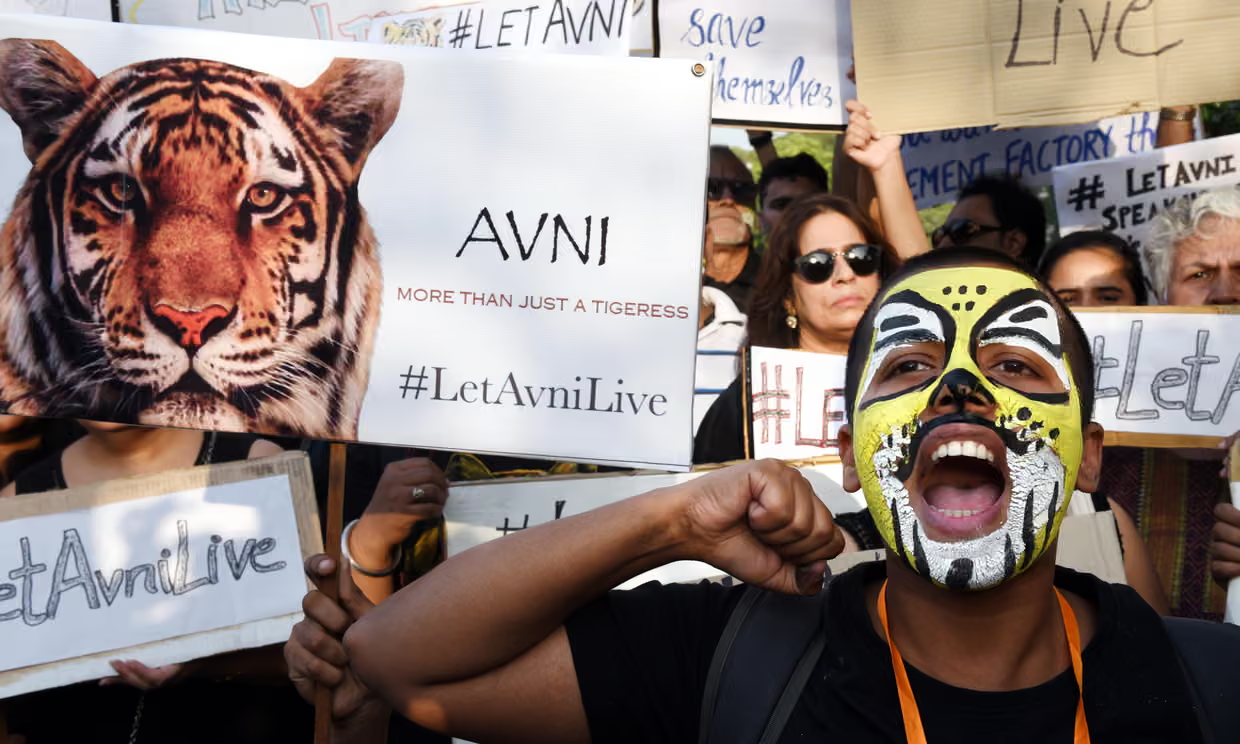
Yet activism is risky. Reporters in Malaysia and Indonesia face harassment for revealing corruption. Still, public persistence is reshaping the politics of silence. When citizens understand that tiger extinction equals failed democracy, pressure becomes patriotism. Political will does not emerge from benevolence—it grows under scrutiny. Every headline, every protest, every image of a snared tiger pushes leaders to choose between reputation and reality. The more eyes watch, the fewer excuses survive.
When Leadership Fails
Failure of political will follows a script—promises made after tragedy, forgotten before action. In Indonesia, presidents declare “decades of recovery” while approving palm concessions the next month. In Malaysia, task forces dissolve after one meeting. In India, some states still treat tiger deaths as PR crises, not ecological collapse. This pattern reveals moral laziness: the belief that species survival can wait for stability. When leadership fails, bureaucracy imitates. Forest officers hesitate, budgets stall, and law becomes ritual.
Collapse starts with one unpunished bribe, one unsigned patrol order, one budget cut disguised as efficiency—and ends with empty forests. Political will is not infinite; it must be renewed through moral courage. The world’s last tigers will not fall to ignorance but to leaders who preferred applause over accountability.
Myanmar’s forests once held some of the densest tiger habitats in mainland Southeast Asia. Today, they are scarred by decades of civil conflict, timber trafficking, and political collapse. Since the military coup of 2021, every thread of environmental governance has unraveled. Patrols stopped, park staff fled, and equipment was stolen or abandoned. Poachers now move freely through protected areas like Hukaung Valley and Htamanthi, which were once heralded as tiger strongholds.
The state-controlled Forest Department exists mostly on paper; its field offices function as checkpoints for armed groups, not guardians of wildlife. Political will in Myanmar died long before the forests did—it died when conservation was reduced to foreign-funded branding exercises that vanished with each regime change. International donors withdrew, fearing sanctions, while generals looked the other way as illegal teak and wildlife exports financed their own networks. Tigers here are collateral damage of corruption disguised as chaos.
When power fragments, accountability disappears. Local communities, armed for survival, trap whatever enters their fields because hunger leaves no choice. Political will cannot exist in a vacuum of legitimacy. In Myanmar, there is no state capable of protecting tigers, only shifting militias managing resources for war. Extinction, in such a place, is not failure—it is policy made through neglect.
Vietnam is a case study in how political will can vanish while bureaucracy thrives. The country officially lists tigers as a protected species, yet not a single wild individual remains. Poaching, habitat loss, and state-sanctioned breeding farms erased them one by one. For years, government statistics insisted on “dozens” of tigers left, though researchers and rangers knew better. Until all tigers were gone.
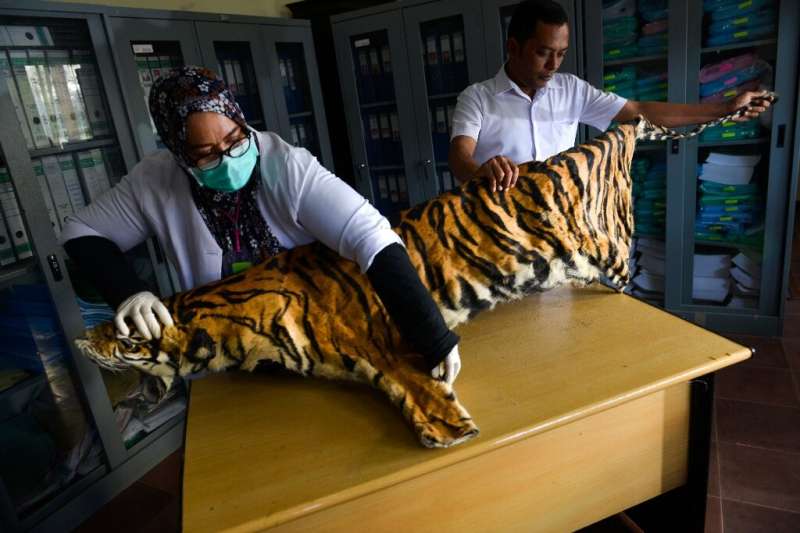
The real industry was in captivity: farms breeding tigers for bone wine and “traditional” tonics, operating under the guise of conservation. Political will collapsed into complicity. Ministries issued licenses; provincial officials took bribes; and inspectors wrote glowing reports about cages holding skeletal cats pacing behind concrete bars. Vietnam’s tiger extinction was not an accident—it was a managed transition from wilderness to commerce. Even now, efforts to investigate illegal trade meet polite denial.
The government celebrates tourism slogans about “green growth,” while allowing the black market to flourish through diplomatic loopholes with Laos and China. Unlike Indonesia’s open destruction or Malaysia’s inertia, Vietnam hides behind efficiency. Its system works perfectly for everything except the truth. A nation that once worshipped the tiger as a symbol of strength now bottles it as luxury. The lesson is brutal but clear: where political will is replaced by paperwork, extinction becomes a form of governance.
Outro: Choosing the Future
The tiger’s survival is a referendum on governance. Nations that protect tigers prove capacity to protect citizens, water, and climate. Those that fail reveal political decay. The UNDP Global Tiger Initiative calls political will “the most endangered resource in conservation,” and they are right. The science exists, the money exists, but conviction does not. Yet examples from India, Russia, and China prove that direction can change when leaders see legacy in preservation, not exploitation.
Indonesia and Malaysia could follow, turning corruption reform into ecological redemption. What matters now is institutionalizing will—binding budgets to results, linking infrastructure approvals to ecological audits, and enforcing penalties for delays. Political will must become measurable: days from alert to action, percentage of cases prosecuted, funds reaching the field. The challenge is consistency beyond elections; the opportunity is vast. When voters start punishing environmental betrayal as they do inflation, forests will finally breathe again. The tiger is not just an emblem of wilderness but of governance itself—a living test of whether power still remembers responsibility. Its roar will echo only where courage outweighs convenience.