Introduction — A Silent Epidemic
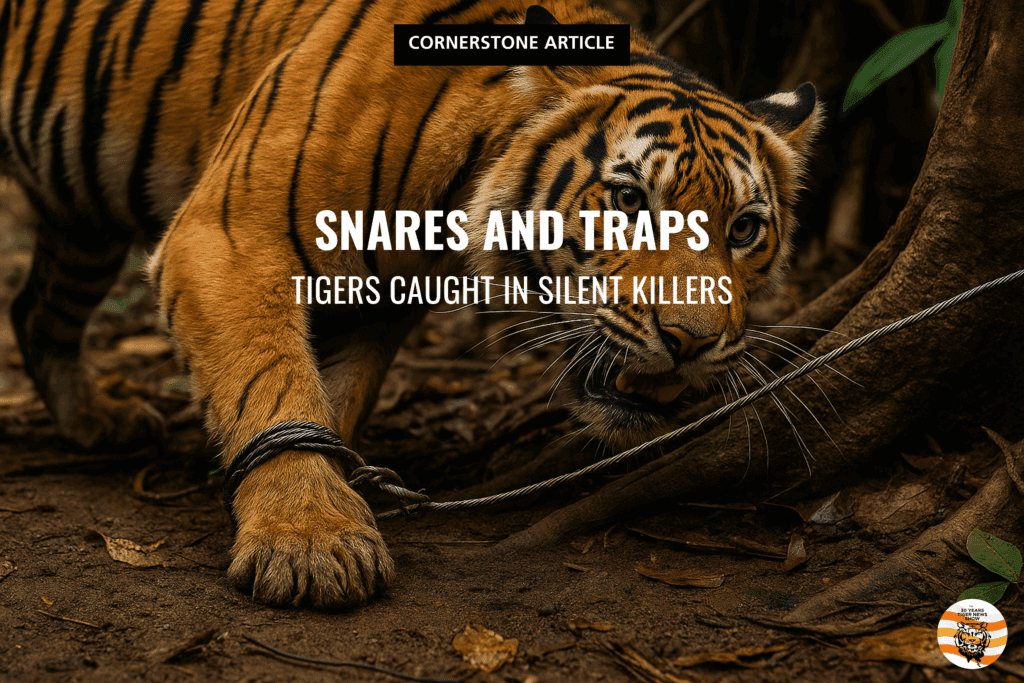
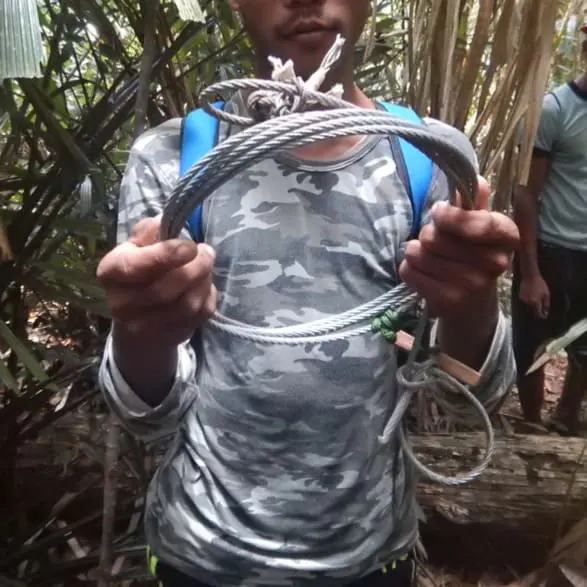
Snares and traps are silent killers haunting Asia’s last tiger forests. Unlike rifles or poisons, these crude devices require no license, no training, and almost no investment. A coil of brake wire, a discarded bicycle cable, or even rope scavenged from a roadside can be twisted into a lethal loop within minutes. Anchored to a tree and camouflaged beneath leaves or grass, it waits silently for an unsuspecting victim.
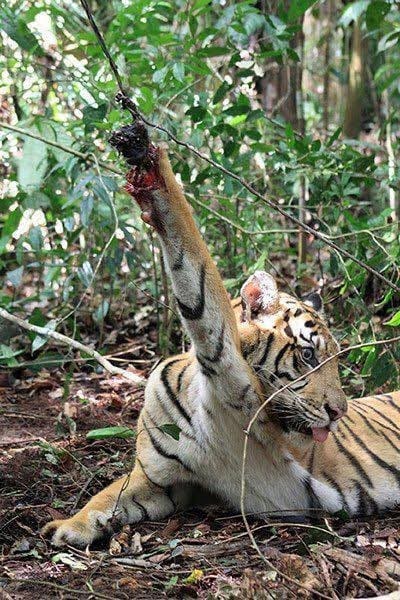
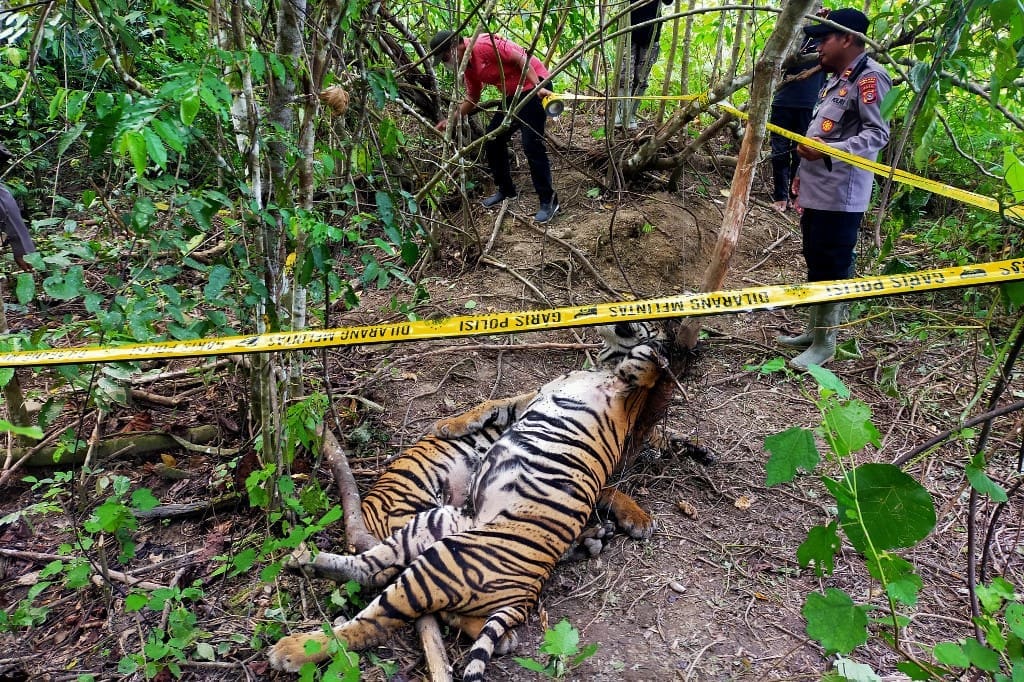
When a tiger steps into the noose, every struggle only makes it worse. The wire tightens with each movement, sawing deeper into muscle. Arteries collapse, tendons tear, bones splinter. Death comes slowly—through infection, blood loss, hunger, or exhaustion. Mostly a combination. Even those that escape often suffer permanent injuries, unable to hunt or breed, effectively erased from the population.
The cruelty of snares and traps is multiplied by scale. In Cambodia, more than 200,000 were removed in just one decade. In Laos and Vietnam, rangers bring back bundles of wire after every patrol. India, home to most of the world’s remaining wild tigers, faces the same epidemic. Indonesia, the once proud host of three different tiger species, seems to make it a challenge to put as many snares in the Sumatran forests as possible. Deer, elephants, pangolins, leopards, even domestic cattle are mutilated or killed. A single snare will neutralize a breeding tigress, leaving her cubs to starve.
What makes snares and traps especially dangerous is that they leave almost no trace from above. Satellites capture images of lush green forest, but they cannot show the hidden minefield beneath. Governments exploit this invisibility, publishing selective numbers and avoiding accountability. Every loop of wire is more than a poacher’s trick. See it as evidence of structural neglect and political failure, proof that extinction does not require bullets. It creeps in quietly, through silence, steel, and willful neglect.
How Snares and Traps Work
Snares and traps may appear primitive, but their simplicity makes them devastating. A poacher forms a loop of steel wire or heavy cable, anchors it to a tree or stake, and positions it along a trail or near a water source. The device requires no trigger, no constant watch. It waits passively until an animal steps into the loop. Once the noose cinches, instinct tells the animal to pull away. Every movement only tightens the grip. Flesh is torn, circulation cut off, bones fractured. Infection spreads rapidly in humid forests, and even if the animal does not die immediately, which is likely, starvation or predation follows. A slow and cruel death.
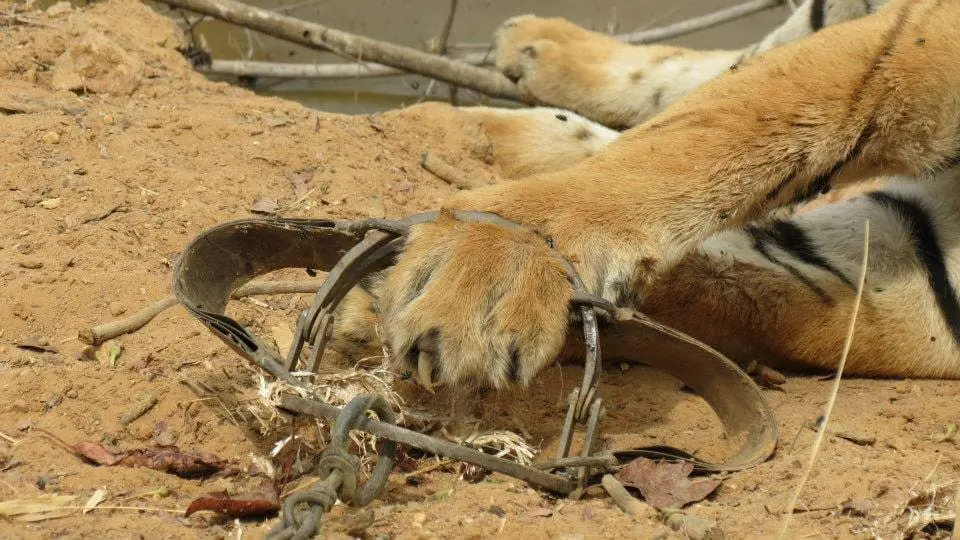
Foothold traps are less common but equally brutal. Made of steel jaws that snap shut with tremendous force, they crush bones instantly. A tiger caught in one drags the trap across kilometers, leaving a bloody trail until its collapse. If it is a mother, dependent cubs die soon after. Even survivors are crippled for life, unable to hunt effectively. The cubs of a mother will die then too, as they will never get their necessary hunting training.
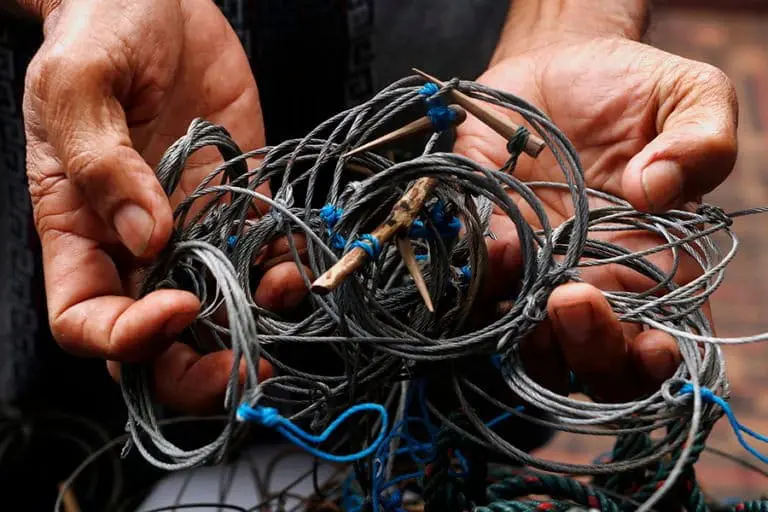
This efficiency explains the popularity of snares and traps. A single poacher can set dozens of snares and traps in one day. They cost almost nothing, require no permits, and can remain lethal for months or even years. A forest seeded with snares becomes a minefield, where survival depends less on strength or instinct and more on luck.
Scale of the Crisis
The scale of snares and traps in tiger landscapes is staggering. Conservationists describe parts of Southeast Asia as “snaring crisis zones,” where the density of wire nooses is comparable to landmines in post-war fields. In Cambodia alone, rangers dismantled over 200,000 snares in just one decade, and even that number represents only what was found. The true figure is far higher. Patrols in Indonesia, Laos and Vietnam sometimes remove hundreds of devices in a single sweep, yet the same locations are re-wired days later.
India, with around 70 percent of the world’s wild tigers, is also besieged. Forest guards in reserves like Kanha, Tadoba, and Corbett routinely seize coils of brake wire and motorbike cables used for traps. Dozens of snares and traps are daily found in buffer zones, where poachers exploit gaps in enforcement. Sumatra, the isle of Indonesia where the smallest of all tigers lives, has hundreds of thousands of snares in its forests. Malaysia, Thailand: more of the same. Each device is capable of crippling or killing a tiger.
What makes the epidemic particularly alarming is its invisibility. Unlike deforestation or mining, snares leave no obvious scars detectable by satellites. This allows governments to hide behind incomplete data, issuing reassuring press releases while forests quietly empty. From the air, the landscape appears intact; on the ground, it is riddled with death. Unvisible snares and traps.
Seeing it this way it is more of a physical manifestation of systemic negligence and denial. Forests that should echo with the calls of wildlife are instead filled with agony and then silence—silence created by human greed, cruelty, and deliberate inaction.

Why They Persist
Why do snares and traps continue to plague tiger habitats despite decades of conservation campaigns? The answer lies in demand, negligence, and profit. For poachers, the economics are irresistible. A coil of cable costing a few dollars can yield a tiger worth thousands on the black market. Deer and boar provide bushmeat that fetches quick profits in restaurants across Asia. For farmers living on the forest edge, snares are often used as crude “protection” against cattle losses. In reality, these devices rarely save livestock — they turn pastures into killing fields where both wildlife and domestic animals suffer.
Demand sustains the trade. Tiger skins, claws, and bones are trafficked into luxury markets and traditional medicine industries. Local hunters receive meager sums, while middlemen and syndicates make fortunes. The pipeline stretches from remote villages to international markets, tying rural poverty to global greed.
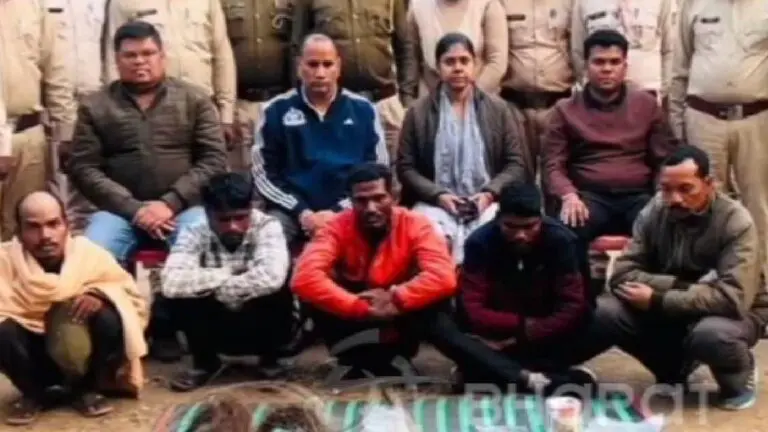
Governments enable the cycle. Forest departments are underfunded, understaffed, and in some cases, corrupted. Penalties for setting snares and traps are rarely enforced. Convictions are even rarer. Too often, snares and traps are dismissed as “minor” offenses compared to firearms, even though their ecological impact is catastrophic.
Prevention is possible. Secure cattle sheds, night enclosures, and compensation programs reduce the urge to lay snares. Community-based grazing plans and strong, low-cost fencing help farmers protect herds without destroying ecosystems. Solar lights and predator-proof corrals are proving effective in some areas. But prevention must go hand in hand with justice: higher penalties and real enforcement against organized poaching networks, not just desperate farmers. Until demand is crushed and enforcement becomes credible, snares will continue to litter forests—cheap weapons in a war against nature.

Indiscriminate Killers Leading to Ecological Disbalance
The cruelty of snares and traps lies in their indifference. They are designed without precision, trapping anything that walks into them. Tigers are the most iconic victims, but countless other species suffer. Elephants have been found with trunks nearly severed by wire loops. In Cambodia, leopards, pangolins, and gaurs are frequent casualties. Ground birds, porcupines, and small mammals die unnoticed, their losses uncounted. But we can take almost any jungle in the world: the number of animals killed daily by snares is incomprehensible.
The ecological consequences are immense. Tigers rely on prey animals such as deer and wild boar. When snares wipe out these species, predators starve to death. When apex predators vanish, ecosystems unravel. The collapse of predator-prey balance leads to cascading effects—rodent overpopulation, crop damage, and the spread of disease. What looks like a thriving forest canopy hides ecological emptiness beneath.
The tragedy compounds when breeding females are killed. A single snare can remove a tigress, leaving cubs defenseless. They die slowly, adding to the silent toll. Genetic diversity erodes, weakening already fragile populations.
So each snare is a ripple of destruction. To call them “primitive” is to ignore their modern function: industrial-scale wildlife eradication with almost no cost. Each loop of wire is a calculated gamble, but the forest pays the price every time.
Human Cost
Snares and traps do not only harm wildlife. Humans, too, are victims. Villagers collecting firewood or children exploring forest edges have been caught in snares, suffering deep lacerations and permanent disabilities. These stories rarely reach headlines, yet they shape local resentment toward conservation authorities, as if they are to blame.
Livestock deaths are common. Cows, goats, and buffalo fall into snares, leaving families ruined. Compensation schemes are slow or absent. Frustrated farmers often retaliate—not against poachers, but against wildlife they wrongly blame. Tigers and leopards are killed in reprisal, even though they were not responsible. So, snares and traps also fuel human–wildlife conflict indirectly, spreading suffering across species.
Rangers and volunteers also pay the price. Dismantling snares is dangerous, physically and politically. The wire cuts through gloves and flesh. Some snares are booby-trapped. Patrols risk ambush from poaching gangs who see them as threats to business. Underpaid, undertrained, and poorly equipped, rangers and volunteers stand as the only barrier between extinction and survival.
Prevention matters here too. Predator-proof corrals, timely compensation for livestock losses, and joint patrols with communities reduce anger and cut the motive for retaliation. Without prevention, conflict escalates; with it, trust and coexistence slowly become possible.
Organized Crime
Behind the apparent simplicity of snares and traps lies a sophisticated criminal economy. Local, ingnorant hunters may set the devices, but they are only the first link in a global chain. Middlemen collect animal parts—skins, claws, bones—and funnel them into syndicates that transport them across borders.
Tiger skins adorn luxury homes. Bones are ground into powders or brewed into tonics sold as medicine. Claws and teeth become jewelry marketed as status symbols. None of this serves subsistence needs. It is a luxury trade, powered by organized crime, where local poachers are unaware of the real proceeds.
The parallels with drug cartels are striking. The same smuggling routes, money laundering channels, and bribery systems are used. Banks process profits, shipping companies move contraband, and corrupt officials look away. Snares may seem primitive, but the networks profiting from them are global and modern.
Until governments classify snares and traps as tools of organized crime rather than “village hunting gear,” enforcement will remain cosmetic. What looks like a piece of wire in the forest is in fact the beginning of a billion-dollar trafficking chain. Each mutilated tiger, or animal in that matter, stands as proof that organized crime thrives when silence covers the forest floor.

Corruption
The persistence of snares and traps is inseparable from corruption. Local officials sometimes alert poachers to patrol routes. Confiscated snares are undercounted in reports to make enforcement appear effective. Politicians receive bribes from syndicates to look the other way.
International donors pour money into anti-poaching programs, but results remain limited. Why? Because structural inaction benefits those in power. Publishing glossy reports is easier than confronting influential traffickers. Behind closed doors, profits circulate freely, while the forests bleed in silence.
Keeping forests full of snares and traps is deliberate. To acknowledge the true scale of snares and traps would be to admit that “protected areas” are only protected on paper. Blame is often shifted onto poor villagers while the real organizers remain untouched.
Tigers are not dying by accident. They are being exterminated by deliberate decisions, backed by corruption at every level. Each hidden snare is more than a piece of wire—it is a political choice. Unless the noose of corruption is broken, the steel nooses in the forest will remain.
Conservation Efforts
Despite the scale of the crisis, there are efforts to fight back. Ranger patrols remain the backbone of anti-snaring campaigns. Tens of thousands of snares are dismantled each year by dedicated teams. In India, hotlines allow locals to report poaching activity. Where patrols are consistent and well-supported, the number of snares declines.
Technology strengthens these efforts. Drones equipped with thermal cameras detect human movement at night. AI-enhanced camera traps can identify poachers as well as animals. But not only that. Community involvement is essential. Programs offering alternative livelihoods—such as eco-tourism, handicrafts, or ranger jobs—reduce reliance on poaching.
Prevention also plays a role. Night enclosures, livestock insurance, and solar lighting reduce farmer dependence on snares. Joint monitoring with local herders helps keep both cattle and wildlife safe. These small, practical measures work when paired with stronger enforcement against organized traffickers.
The lesson is clear: where enforcement, technology, and community engagement work together, snares and traps decline. Where governments pull back, the epidemic resurges. Progress is possible, but only with relentless commitment.
Industry and Empty Forests due to Snares and Traps
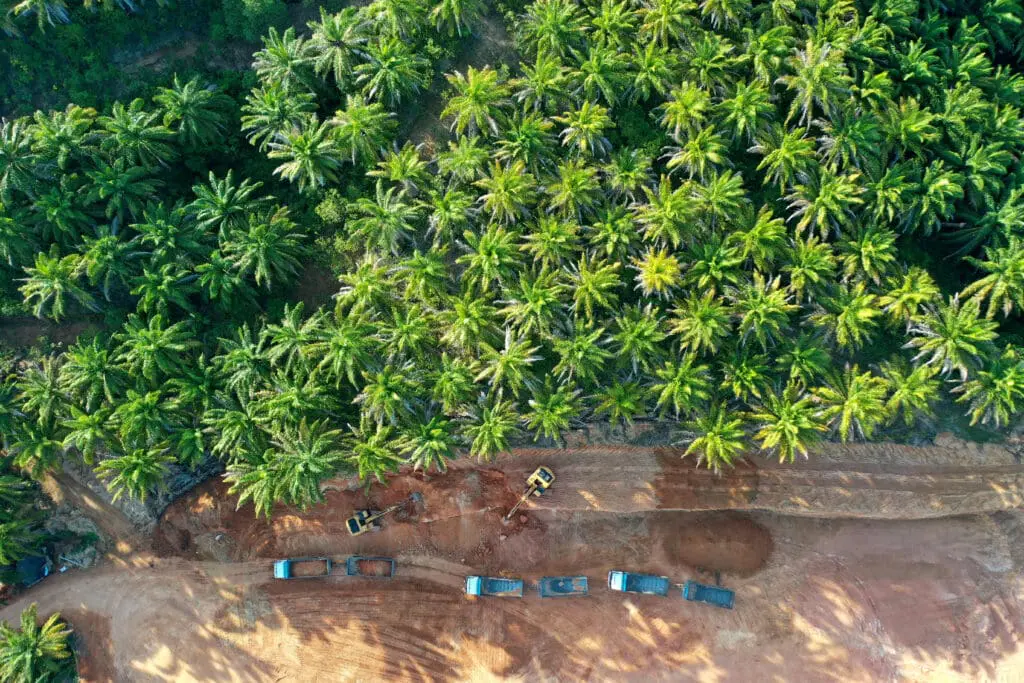
Snares and traps do not spread in isolation. They flourish where industry has already opened the forest. Logging roads, palm oil plantations, and mining concessions give poachers access to previously secure habitats. Each new road is a pathway for both trucks and traps.
This is why conservationists link snares and traps to broader industrial exploitation. A forest fragmented by roads is no longer a fortress. Tigers, already pressured by shrinking habitats, face an additional assault from snares. The result is the “empty forest syndrome”—landscapes that look intact from the sky but are devoid of wildlife.
The hypocrisy is staggering. Governments celebrate the number of snares dismantled, while granting mining permits in the same landscapes. Removing snares without addressing industrial drivers is like bailing water while drilling new holes in the hull. The epidemic of snares cannot be separated from the epidemic of habitat destruction and unchecked deforestation.
Without systemic reform, enforcement will always be too little, too late. To fight snares is to fight the larger system of extraction and profit that makes them inevitable.
Cultural and Social Drivers
While organized crime and industry fuel the crisis, cultural and social factors also sustain snares and traps. In parts of Asia, traditional medicine still promotes remedies derived from tiger bones and other wildlife. Though often illegal, these markets operate in the shadows, keeping demand alive.
Social inequality compounds the problem. Villagers living at the edges of reserves often see little benefit from conservation but bear heavy costs—crop raids, livestock losses, and restrictions on land use. Poachers exploit this resentment, offering small payments for activities that cause enormous ecological harm. For communities with few alternatives, the trade-off feels justified.
Awareness campaigns help, but without real economic incentives, they change little. Posters warning against poaching mean nothing if families remain trapped in poverty. On the contrary: it fuels their interest. Conservation succeeds when people see value in protecting wildlife, not when they are punished for desperation.
Prevention here is about opportunity. Alternative livelihoods, education, and community-managed grazing systems reduce resentment. Support for farmers in crisis makes poaching less appealing. Only by lifting communities alongside wildlife can snares be replaced with coexistence.
Outro — Cut the Wire or Lose the Forest
Snares and traps are not relics of subsistence. They are modern instruments of extermination, cheap to make but devastating in impact. Every hidden loop represents a choice: profit over life, negligence over responsibility, corruption over truth.
Governments that minimize this epidemic are complicit. International donors that accept selective statistics are enablers. Conservation that prefers optics to outcomes becomes a distraction. The forest does not need glossy campaigns—it needs enforcement, prosecutions, and the courage to confront organized crime.
If snares and traps remain unchecked, tiger conservation in certain countries will collapse within a generation. But if reality is faced—with transparent data, relentless patrols, community partnerships, and political will—then survival remains possible.
Every snare cut is not just the removal of a weapon. It is the reclamation of a chance for the forest to live. The question is brutally simple: will we cut the wires, or will we allow silence to claim the forest? The future of tigers—and the integrity of Asia’s ecosystems—depends on the answer.